As satellite internet technology evolves, Amazon’s Leo (formerly Project Kuiper) is emerging as a compelling alternative for those seeking fast, reliable connectivity—especially in areas where traditional internet options fall short. With deployment underway and service expected to begin in late 2025, here’s what makes Leo worth considering.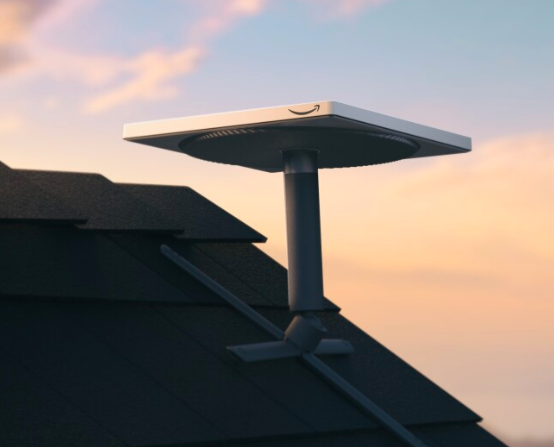
Bridging the Digital Divide
Amazon Leo aims to close the digital divide by delivering fast, affordable broadband to consumers, businesses, government agencies, and organizations in places without reliable connectivity. Billions of people worldwide lack reliable broadband access, limiting their access to modern communications, education, health services, and other important resources. You don’t need to travel far from major cities to lose connectivity; it can happen within an hour’s drive.
What Makes Amazon Leo Different?
Leo combines a low Earth orbit (LEO) satellite constellation with compact, affordable customer terminals, a global network of ground stations, and resilient communications infrastructure powered by Amazon Web Services (AWS), providing high-speed, low-latency broadband on a global scale.
The system will consist of 3,236 satellites in low Earth orbit, with more than 80 launches planned from Arianespace, Blue Origin, SpaceX, and United Launch Alliance to deploy the initial constellation. As of October 2025, Amazon has launched 153 Leo satellites, marking significant progress toward full deployment.
Open Broadband Performs Installations
Amazon’s standard customer terminal measures less than 11 inches square and 1 inch thick, weighing less than 5 pounds without its mounting bracket. Open Broadband technicians can perform turnkey installations, including running cables from the roof indoors to the Wi-Fi router.
Amazon plans three terminal options: an ultra-compact 7-inch square unit delivering speeds up to 100 Mbps for residential customers, the standard 11-inch terminal offering up to 400 Mbps, and a high-bandwidth 19-by-30-inch terminal capable of 1 Gbps for enterprise applications. Amazon aims to keep equipment costs competitive, with dishes priced under $400.
Amazon Leo vs. Starlink: The Key Differences
While both services use low Earth orbit satellites, there are notable distinctions. Starlink currently dominates the market with around 8,000 satellites already operational and 5 million customers worldwide. However, Amazon brings unique advantages to the table.
First, there’s the manufacturing edge. Leo is leveraging Amazon’s track record of mass-producing low-cost electronics like the Echo Dot and Fire TV Stick, suggesting better logistics than Starlink, which has struggled with equipment delivery times.
Second, Amazon’s cloud infrastructure is a differentiator. With AWS integration and a global network of ground stations, Kuiper benefits from Amazon’s existing technology ecosystem. The system includes gateway antennas that securely send and receive customer data to and from satellites, along with global networking that connects those gateway antennas to the internet, public cloud, or private networks.
Performance Expectations
Prototype terminals have already reached speeds up to 400 Mbps, with performance expected to improve in future iterations. For rural areas where most connections offer speeds below 100 Mbps, Amazon’s 400 Mbps capability would be transformative.
Looking Ahead
Amazon began full-scale deployment in April 2025, with service expected to launch to customers later this year. The FCC requires Amazon to have half its satellites operational by July 2026 and the full constellation by July 2029.
For those in underserved areas tired of slow, unreliable internet, Amazon Leo represents another option, and many states have awarded Kuiper BEAD grants to serve underserved areas.
If you decide to use Amazon Leo (or Starlink), remember that Open Broadband provides on-the-ground, local technicians for full installation and maintenance. After all, you don’t want to trust an 800 number for help when you need it.